Top 10 Nigerian Startups to Watch in 2026
Nigeria’s startup scene is experiencing explosive growth, making it one of Africa’s most exciting investment destinations. For Australian investors seeking
Australia’s trusted bridge to Nigeria’s most ambitious opportunitiess
Nigeria, home to Africa’s largest proven natural gas reserves, is actively seeking foreign investment to transform its energy landscape. For Australian investors, this presents a significant opportunity to engage in a high-growth market.
This guide provides a comprehensive overview of investing in Nigeria‘s gas sector, covering key government policies like the “Decade of Gas,” specific opportunities from domestic infrastructure to liquefied natural gas (LNG) export, and a practical roadmap for navigating the associated risks and regulatory environment.
For decades, Nigeria’s identity as an energy powerhouse was almost exclusively linked to crude oil. Natural gas was often seen as a byproduct, an inconvenience to be flared off during oil extraction.
This perspective has undergone a dramatic transformation. The Nigerian government and private sector now recognise natural gas as the key to unlocking the nation’s industrial potential, diversifying its economy, and playing a more significant role in the global energy market.
Nigeria possesses Africa’s largest proven natural gas reserves and ranks among the top ten globally. Official estimates place these reserves at over 200 trillion cubic feet (TCF), with a potential for as much as 600 TCF if unproven reserves are factored in.
This vast resource base is largely untapped. To put this into perspective, Australia’s proven reserves are around 80 TCF. This illustrates the sheer scale of the resource waiting for capital and technology to bring it to market.
A significant portion of Nigeria’s gas is “associated gas,” meaning it is found alongside crude oil deposits. The historical focus on oil extraction meant this gas was treated as waste.
There is also a substantial amount of “non-associated gas” in dedicated gas fields, which have remained underdeveloped. The current policy push is designed to monetise both types of gas reserves, creating a wide range of investment entry points.
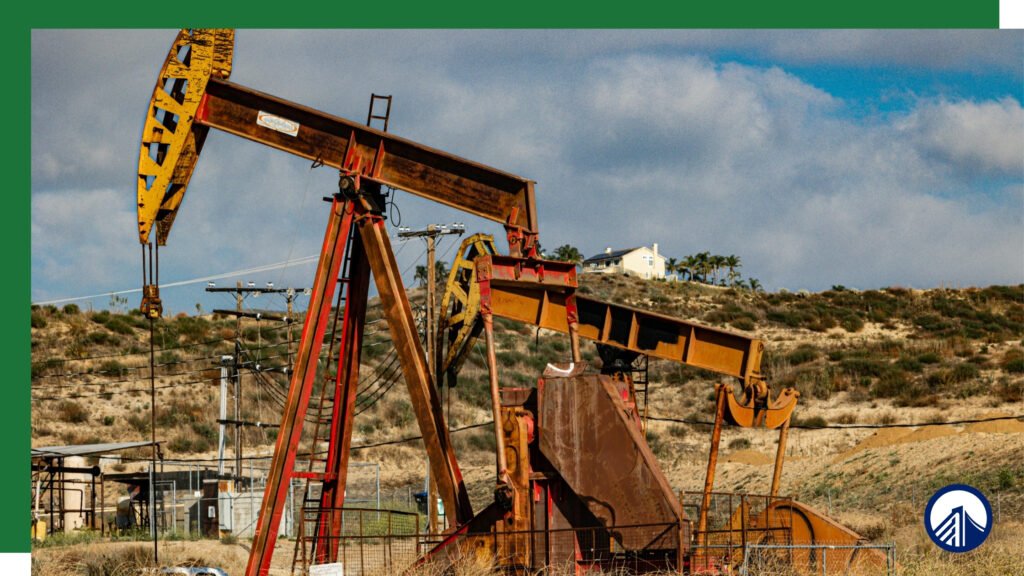
Gas flaring, the process of burning off associated gas at oil production sites, has been a long-standing economic and environmental issue in Nigeria. For years, billions of cubic metres of valuable gas were wasted annually, contributing to atmospheric pollution and depriving the nation of revenue and energy.
The government has implemented stricter regulations and penalties to curb this practice, creating a powerful incentive for oil companies to capture and commercialise this gas.
This pivot from flaring to monetisation is the central theme of Nigeria’s new energy strategy. It represents a national priority to harness this resource for domestic use and export.
This includes channelling gas to power plants to solve the country’s chronic electricity shortages, supplying it as feedstock for industries like petrochemicals and fertilisers, and exporting it as LNG to international markets. This strategic shift is the primary driver behind the foreign direct investment opportunities now available.
Navigating the regulatory landscape is a primary concern for any investor considering a new market.
In Nigeria, recent legislative reforms have been specifically designed to attract foreign capital into the gas sector by improving transparency, clarifying fiscal terms, and establishing a more stable investment environment.
For an Australian investor, these frameworks provide the necessary structure to assess risk and project viability.
Launched in 2021, the “Decade of Gas” is a government-led initiative with a clear objective: to make Nigeria a gas-powered economy by 2030. It is more than a slogan; it is a comprehensive plan backed by policy actions aimed at stimulating investment across the entire gas value chain.
The initiative focuses on building critical infrastructure, removing regulatory bottlenecks, and promoting gas as a cleaner alternative to liquid fuels for transport and power generation.
The program aims to attract over US$20 billion in annual investment to develop gas processing facilities, pipelines, and export terminals.
The “Decade of Gas” serves as an open invitation to participate in a nation-building infrastructure program.
The passage of the Petroleum Industry Act (PIA) in 2021 was a landmark moment for Nigeria’s energy sector. It replaced a web of outdated and often conflicting regulations with a single, coherent legal framework. The PIA is designed to enhance transparency, improve efficiency, and provide clarity on the rules of engagement for investors.
Key provisions relevant to gas investment include:
The push to develop Nigeria’s gas resources has created distinct and varied investment opportunities. These range from large-scale infrastructure projects aimed at satisfying domestic demand to export-focused ventures targeting the global LNG market.
Nigeria’s biggest challenge, and therefore one of its largest investment opportunities, is its power deficit. The country has an installed electricity generation capacity that is a fraction of what is needed to power its economy and 200 million-plus population.
Natural gas is the designated fuel to bridge this gap. This requires massive investment in midstream infrastructure.
The flagship project in this area is the Ajaokuta-Kaduna-Kano (AKK) pipeline, a 614-kilometre pipeline designed to transport gas from the southern part of the country to the north. This project will unlock demand for power generation and industrial use in underserved regions.
Opportunities exist for investment in pipeline construction, gas processing facilities to treat the gas before it enters the pipeline, and the development of gas-fired power plants and industrial parks along its route.
Nigeria is already a major player in the global liquefied natural gas (LNG) market through its Nigeria LNG (NLNG) facility on Bonny Island. NLNG is one of the most successful joint ventures in the country, involving the Nigerian National Petroleum Corporation (NNPC) and international oil companies.
The current major investment opportunity is the NLNG Train 7 project, an expansion that will increase the facility’s production capacity by 35%. While the primary equity investment is established, vast opportunities exist in the project’s supply chain.
These include engineering, procurement, and construction (EPC) contracts, logistics, marine services, and the provision of specialised technology. Australian companies in the METS (Mining Equipment, Technology, and Services) sector, which have supported Australia’s own LNG boom, possess skills that are directly transferable to the Nigerian context.
Further LNG projects are also on the drawing board, signalling long-term growth in Nigeria’s gas export capacity.
Beyond power and export, a third pillar of Nigeria’s gas strategy is industrialisation. Natural gas is a critical feedstock for producing fertilisers, methanol, and other petrochemicals. Given Nigeria’s large agricultural sector, developing a domestic fertiliser industry powered by local gas is a high priority for food security and economic diversification.
Investment opportunities in this area include building new fertiliser plants, petrochemical complexes, and other industrial facilities that use gas as a primary input.
These are typically large-scale, long-term investments that offer the potential for high returns and significant development impact. These value-added projects align well with the capabilities of large institutional investors and multinational corporations.

While it is possible to establish a 100% foreign-owned company in Nigeria, many investors choose to form joint ventures (JVs) with local partners.
A strong local partner can provide invaluable knowledge of the market, help navigate bureaucratic processes, and manage community relations. The selection and vetting of a partner is one of the most important decisions an investor will make.
The legal framework for investments is robust. Shareholder agreements, JV agreements, and other contracts are legally enforceable.
It is common practice to specify international arbitration (e.g., in London or Paris) in contracts to resolve potential disputes, providing an additional layer of comfort for foreign investors.
Nigeria’s gas development is not happening in a vacuum. It is taking place against the backdrop of a global energy transition. This context is important for understanding the long-term viability and strategic positioning of investments in the sector.
While the world is moving towards renewables, there is a broad consensus that natural gas will play a critical role as a “transition fuel.” Gas is significantly cleaner than coal and oil, and it provides the reliable, dispatchable power needed to support industrial economies.
For many energy-importing nations, particularly in Europe, Nigerian LNG is seen as a way to diversify their energy supply away from other sources. Nigeria’s gas can help reduce global emissions by displacing more carbon-intensive fuels, positioning it as a key part of the medium-term solution to the world’s energy needs.
Investment in Nigeria’s gas sector can also be a catalyst for renewable energy investment. One of the main challenges with renewables like solar and wind is their intermittency; they do not generate power when the sun isn’t shining or the wind isn’t blowing.
A reliable national grid, powered by gas-fired plants, is necessary to provide the baseload and backup power that enables the large-scale integration of renewables. Therefore, an investor with a broad energy portfolio could see an investment in gas infrastructure as a foundational step that de-risks future investments in Nigeria’s abundant solar energy potential.
Nigeria’s gas sector represents one of the most significant energy investment opportunities in the world today. The combination of vast, untapped reserves and strong government commitment has created a fertile ground for growth.
For Australian investors, the market offers a chance for substantial returns and diversification away from more saturated markets. While the operational and regulatory risks are real, they are manageable with careful planning, robust due diligence, and strong local partnerships.
Nigeria’s journey to becoming a gas-powered economy is underway, and it presents a compelling case for strategic Australian capital.
Nigeria is considered a high-risk, high-reward investment destination. It has Africa’s largest economy and population, offering immense market potential. The recent implementation of the Petroleum Industry Act (PIA) and pro-investment policies like the “Decade of Gas” have significantly improved the investment climate in the energy sector. However, investors must be prepared to navigate challenges such as security issues in certain regions, bureaucratic delays, and currency risk. With thorough due diligence and a long-term perspective, Nigeria can be a very good country to invest in.
A foreigner can invest in Nigeria by following a structured process. First, they must register a company in Nigeria with the Corporate Affairs Commission (CAC). After incorporation, they need to obtain a Business Permit from the Nigerian Investment Promotion Commission (NIPC). To bring in funds, the investment must be made through an Authorised Dealer (a bank) to receive a Certificate of Capital Importation (CCI), which is essential for repatriating profits. It is highly recommended to engage local legal and financial advisors to guide you through the process.
The “best” investment depends on the investor’s risk appetite and expertise. Currently, the gas sector offers some of the most compelling large-scale opportunities, particularly in midstream infrastructure (pipelines, processing plants) and LNG export projects. Other high-growth sectors include technology (fintech), agriculture, and consumer goods, driven by the country’s large and youthful population. For investors focused on energy, gas infrastructure is arguably the most strategic investment due to strong government support and massive unmet demand.
Nigeria has the largest proven natural gas reserves in Africa and is ranked ninth globally. The proven reserves are officially estimated to be over 200 trillion cubic feet (TCF). Additionally, the country is estimated to have a potential of up to 600 TCF in unproven reserves, indicating a vast and underdeveloped resource base.
The primary challenges of gas production in Nigeria include inadequate infrastructure for gathering, processing, and transportation; security concerns in the Niger Delta region which can lead to operational disruptions; and historical underinvestment due to a policy focus on oil. Additionally, securing financing for large-scale projects and navigating regulatory processes can be complex, though the Petroleum Industry Act (PIA) aims to alleviate some of these hurdles.
The largest producers of gas in Nigeria are typically the major international oil companies (IOCs) operating in joint ventures with the Nigerian National Petroleum Corporation (NNPC). Companies like Shell, TotalEnergies, and Eni are significant producers, largely through their operations in the Niger Delta. The Nigeria LNG (NLNG) consortium, which includes NNPC and these IOCs, is the primary entity for liquefying and exporting gas.

Nigeria’s startup scene is experiencing explosive growth, making it one of Africa’s most exciting investment destinations. For Australian investors seeking

For Australian investors exploring international markets, Nigeria presents a compelling, high-growth opportunity in real estate. This analysis offers a data-backed